Workplace Amputation Injury Lawyer Texas: What Injured Workers Should Know
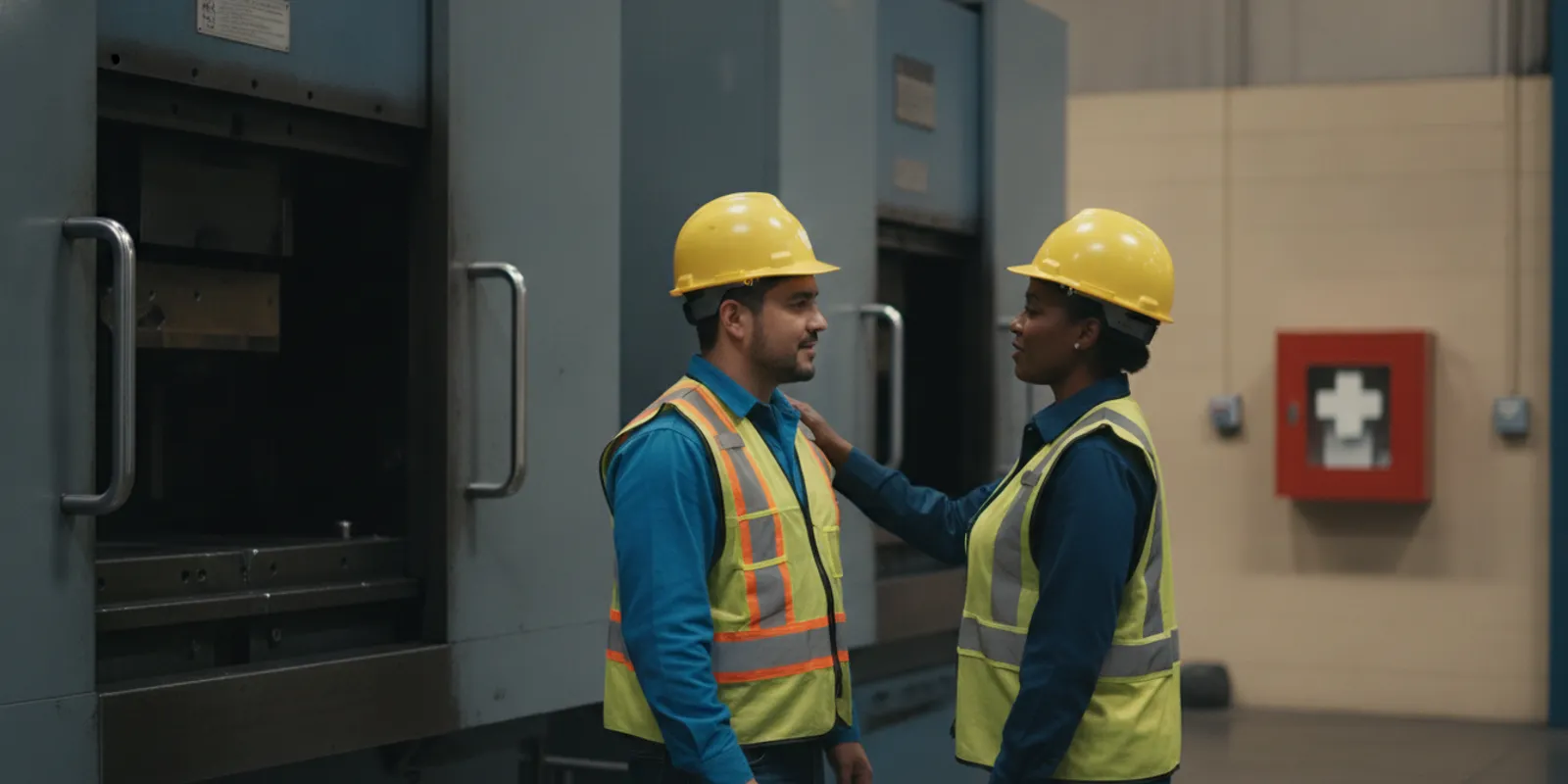
An amputation at work can change a person’s health, independence, income, and family routine in an instant. If you are searching for a “workplace amputation injury lawyer Texas” workers can consult, the first priority is still emergency care. After urgent needs are addressed, preserve records and find out which company controlled the work, what coverage the employer carries, and whether another party may have contributed.
Contact Dodson Law Firm about a case review
By Wendi R. Bailes-Dodson
This article offers general information, not legal advice or a prediction about any claim. The right next steps depend on the injury, the employer’s coverage status, the worksite, and the evidence. A serious injury does not by itself prove that an employer or another party was legally at fault.
What should you do immediately after a work-related amputation?
Call 911 or get emergency medical care when needed. Do not delay treatment to gather evidence, make a recorded statement, or determine who may be responsible. Follow the instructions of emergency personnel and treating clinicians. If you are a family member helping an injured person, focus on care, communication with medical providers, and practical support.
Once it is safe, report the incident to a supervisor or the employer through the usual reporting channel. Be factual: state when and where it happened, what task was underway, what equipment or material was involved, and who witnessed it. If you do not know an answer, say so rather than guessing. Keep a copy or photo of any written report you are allowed to retain, and note when and to whom you reported it.
Do not return to a hazardous area to retrieve a phone, tool, or personal item. Do not move equipment or clean the scene unless necessary for immediate safety or directed by responders. If a coworker or family member can safely take photographs without interfering with care, images of the surrounding area, machine, guards, floor conditions, and warning labels may help preserve context. Never put anyone at risk to get a picture.
OSHA’s worker rights information explains that employees can report injuries and illnesses and obtain certain records. That resource is general workplace-safety information. It does not decide who is liable or what compensation may be available in a particular Texas case.
What medical care and follow-up may be needed?
An amputation injury may require emergency surgery, wound care, infection monitoring, pain management, rehabilitation, and later treatment for mobility or daily-function needs. The actual plan belongs to the patient and medical team. This article cannot assess an injury or recommend treatment. Ask the treating professionals to explain urgent warning signs, follow-up dates, restrictions, and who to call with new symptoms or concerns.
Keep copies of discharge instructions, visit summaries, prescriptions, referrals, work restrictions, and appointment information. If care moves between an emergency department, surgeon, rehabilitation provider, or other facility, record the provider’s name and the date of each visit. Make a simple list of questions for appointments. A trusted person can help take notes when pain, medication, stress, or fatigue makes it difficult to remember everything.
Tell providers what happened as accurately as you can, including the machine or tool involved and the body part affected. Do not minimize symptoms or speculate about legal fault during medical visits. Medical records should reflect the care and information given to clinicians, not an argument about a future claim. If a provider asks about work duties or prior conditions, answer truthfully and ask for clarification if you are unsure what is being requested.
Recovery may continue after hospital discharge. There can be follow-up procedures, therapy, assistive devices, changes to the home, transportation challenges, and help with ordinary tasks. Keep a dated record of scheduled care and practical problems. Do not try to force your recovery into a legal timetable or return to work before your medical team addresses your restrictions and safety.
How should you document the incident without interfering with recovery?
Write down what you remember as soon as you are able, then add details later if they come back. A useful account includes the date and approximate time, location, job assignment, people present, instructions received, equipment used, and events immediately before and after the injury. Separate what you personally saw or heard from what someone else later told you. Mark uncertain details as uncertain rather than filling gaps with assumptions.
Save relevant messages, schedules, training materials, safety checklists, work orders, photographs, and communications with supervisors. Keep the original files when possible and make a backup in a secure location. Do not edit an image to make a point or post sensitive photographs publicly. If records are stored on an employer’s system, do not access anything you are not authorized to use; make a note of what records may exist and where they are kept.
Make a short witness list with names, job roles if known, and a way the employer can reach each person. Note who saw the event, who arrived shortly afterward, and who inspected or moved equipment. Do not pressure coworkers to adopt your version of events or coordinate what they should say. Independent accounts are more useful when each witness reports what they actually remember.
Keep a personal recovery log if it is manageable. Brief notes can describe pain or mobility problems, sleep disruption, appointments, assistance needed, missed activities, and changes in work capacity. This is not a substitute for medical records and does not need to be elaborate. Record concrete examples, such as difficulty getting through a doorway with a mobility aid or needing help with a task that was previously routine. Your health and treatment come first; a log is optional.
Why can evidence be important after an amputation injury?
Workplace equipment, electronic logs, video, inspection records, and scene conditions can change quickly. A machine may be repaired, replaced, or returned to use. A work area can be cleaned. Video systems may overwrite older footage. A prompt, lawful request to preserve relevant information can sometimes matter, but an injured worker should not trespass, remove company property, or attempt to conduct a dangerous inspection.
Potentially useful evidence depends on what happened. For a machine incident, it may include the equipment make and model, guards, emergency stops, maintenance history, operating instructions, and any inspection or repair records. For a fall or crushing event, it may include photographs of the area, load, surface, lighting, barriers, and work plan. For a vehicle incident, it may include driver and company details, vehicle records, and available video. These are examples, not a checklist that proves fault in every case.
Record the names of companies involved, not only the employer who issued your paycheck. A job site can include a property owner, general contractor, staffing company, equipment supplier, maintenance provider, and subcontractors. That list does not mean each company is legally responsible. It gives a lawyer a starting point to investigate who owned, supplied, maintained, operated, or controlled the relevant equipment and work.
Dodson Law Firm’s guide to steps after a Texas workplace injury discusses reporting and recordkeeping in broader terms. An amputation can raise additional questions about machine design, safety systems, work assignments, and the identity of each business involved. A detailed, timely record may help answer those questions, but no single photograph or document guarantees a legal result.
How can you find out whether the employer has coverage?
Do not assume every Texas employer has the same coverage or that every work injury follows the same claim process. Texas has a system in which many private employers can choose whether to participate; public employers and certain other situations may have different rules. The legal path can depend on the employer’s status, the worker’s relationship to the company, and the circumstances of the injury. An employee may not know the answer from a handbook or a supervisor’s informal comment.
Ask for the employer’s written information about coverage and the process for reporting an injury. Keep the response and note the date. If you work through a staffing agency, subcontractor, or labor provider, identify each company and ask which one hired you, directed the work, paid you, and was responsible for the site or equipment. The company that issues a paycheck may not be the only business whose role needs review.
Coverage status can affect the available process and defenses, but it does not by itself settle whether someone acted negligently. For example, a covered employer’s benefits process and a claim against a separate equipment supplier are different questions. A non-subscriber employer may face a different kind of claim under Texas non-subscriber workplace injury law, but the worker still needs a fact-specific evaluation of legal responsibility and proof. Do not infer that an employer is a non-subscriber just because you do not immediately see coverage paperwork.
Keep communications professional and in writing when practical. Ask how to submit forms, where to send medical information, and whom to contact about work status. Read any document before signing it. If something is unclear, request time to review it and obtain advice before making statements about fault, accepting a proposed resolution, or releasing claims. The exact consequences depend on the document and circumstances, so do not rely on a general article to interpret a form.
The firm’s overview of non-subscriber workplace injury claims explains a related Texas issue. It is not a determination of your employer’s status. A legal review may need employer records, hiring documents, worksite arrangements, and information about who controlled the work.
What legal paths might be reviewed after a workplace amputation?
There is no single claim path for every amputation. Depending on the facts, an injured person may need to understand an employer’s coverage process, consider a claim under Texas non-subscriber workplace injury law, or investigate a possible claim against a separate party. These paths can have different proof requirements, procedures, deadlines, and potential defenses. Naming a possible path is not the same as proving that it applies.
A claim involving the employer
If an employer has not subscribed to the state system, a worker may be able to bring a negligence claim, subject to the governing law and facts. Questions can include whether the employer failed to use reasonable care, whether that failure caused the injury, and whether the worker’s actions or other events matter under the applicable rules. Texas law may limit certain defenses for a non-subscriber, but that does not make every workplace injury an automatic recovery. The precise rules and available defenses should be assessed by a Texas attorney after reviewing the case.
Possible evidence may concern training, supervision, staffing, safety procedures, machine guarding, maintenance, or the way a task was assigned. A serious outcome alone does not prove that a safety rule was violated or that a violation caused the injury. The investigation has to connect specific conduct or omissions to the event and address evidence that may point in different directions.
A claim involving another company or person
A third party may be relevant if a separate company or person may have contributed to the incident. Examples could include a contractor responsible for a work area, a maintenance provider, an equipment manufacturer or seller, a driver, or a property owner. Whether any of these parties owed a legal duty, breached it, and caused harm depends on the specific relationship and evidence.
Do not assume a product defect because a machine was involved, or assume a contractor is responsible simply because it was present at the site. Equipment records, warnings, design information, inspection history, contracts, and who had control over the task may all matter. A third-party investigation can also be relevant when an employer has coverage, but pursuing another party does not automatically change the employer’s coverage status.
Separate rights and processes
Some cases involve more than one potential path, and some involve none that can be established after investigation. A benefits claim, a negligence case, an employment issue, and a product-liability theory are not interchangeable. Different deadlines may apply. A person can harm their position by assuming one process protects every possible claim or by waiting to ask what deadlines apply.
The best first legal question is not “What amount is my case worth?” It is “Who may be legally responsible, what process applies, and what evidence should be preserved now?” A lawyer can explain what is known, what remains uncertain, and whether a claim path warrants further investigation. No responsible lawyer can promise a result from the description of an injury alone.
What information helps a lawyer evaluate the situation?
You do not need a complete case file before asking for an initial review. If you have them, gather the employer’s name and address, staffing or subcontractor information, incident date and location, basic injury report, medical facility names, and any coverage paperwork. Bring or securely share photographs, witness names, messages, schedules, equipment labels, and relevant work instructions that you lawfully possess.
It can help to prepare a one-page timeline. Start with your job role and the task assigned that day. List the instruction or event that led to the injury, what happened next, who was present, when the incident was reported, and where you received care. Identify gaps with phrases such as “not sure” or “need to confirm.” The timeline is a working aid, not a sworn statement and not a reason to delay treatment.
Write down questions that matter to you. You might ask whether an employer’s coverage status has been confirmed, whether another company should be identified, what evidence could disappear, what deadlines may apply, and how legal fees work. Ask what documents the lawyer needs and how to send them safely. Do not send sensitive medical or identity documents through an unverified email address or public social media account.
Dodson Law Firm handles workplace-injury matters within its personal-injury practice and describes these matters using Texas non-subscriber workplace injury law. A consultation can help identify questions for further review; it cannot replace medical care or guarantee a claim. The firm’s workplace injury attorney information may help you understand when legal guidance could be useful.
How can an amputation affect work, income, and daily life?
The practical effects vary from person to person. Medical restrictions may affect whether a worker can return to the same task, perform modified duties, or work at all for a period. Mobility, sensation, strength, pain, fatigue, and the need for adaptive equipment can affect ordinary activities. Avoid assuming that two people with similar injuries will have the same recovery or employment options.
Keep copies of written work restrictions and any communications about modified duties, leave, or return-to-work expectations. If the employer offers a different assignment, request the duties and physical requirements in writing and discuss them with your treating professionals. Do not perform tasks that conflict with medical restrictions simply to avoid a difficult conversation. Ask for clarification if a restriction or proposed task is not clear.
Record concrete financial effects without estimating a legal claim value. This might include dates of missed work, pay statements, receipts for travel to treatment, or out-of-pocket costs. Keep the originals and note which expenses relate to care or recovery. If family members take on added caregiving or transportation duties, they can keep a simple record of the time and tasks. Whether any item is recoverable depends on the legal theory and proof.
There may also be emotional and family effects. It is reasonable to ask providers about counseling or other support if the injury brings distress, anxiety, or changes in sleep. A legal process should not dictate when a person is ready to discuss painful events. Take breaks, have a support person present where appropriate, and tell a lawyer if a meeting or question is becoming difficult.
Who may have controlled the equipment or worksite?
After a catastrophic injury, the employer may be the first company you think of, but a worksite often involves several organizations. One business may own the property, another may direct the project, and another may supply, inspect, or repair the equipment. A staffing agency may handle hiring while a different company assigns daily tasks. These roles can overlap, and the written agreement may not tell the whole story about who actually controlled a particular operation.
For that reason, make a list of business names from what you know: the name on your pay documents, the employer or contractor at the site, the equipment brand or rental company, and any company signs or vehicle markings you recall. Note who gave safety instructions, who assigned the task, who maintained the machine, and who could stop work. Mark any item you have not verified. Do not approach a company site or collect private records yourself; this information is a lead for a lawful investigation.
A lawyer may review contracts, purchase or maintenance records, site plans, training materials, and witness accounts to understand the relationships. A company’s presence does not automatically make it responsible, and a contract’s wording does not alone decide every question of control or legal duty. The purpose of identifying the businesses is to avoid overlooking an important role, then test each possible connection against reliable evidence.
How can family members support an injured worker?
Family and close friends can help with practical tasks while respecting the injured person’s choices. They may keep a list of appointments, organize copies of forms, arrange rides, or write down questions for medical providers. If the injured person wants help communicating with an employer or lawyer, agree on what information may be shared and who should speak. Do not assume that a family member can access medical or employment records without the person’s permission.
It can be useful to create one secure place for important documents. Keep medical instructions separate from employer paperwork and potential legal records. Use a simple index that lists document dates and sources, rather than marking up originals. A family member can also maintain a calendar for follow-up visits or note practical support provided, if the injured person finds that helpful. Keep sensitive information private and share it only with people who need it.
Recovery can be physically and emotionally demanding, and family members may also need support. Give the injured person room to make decisions at their own pace. A lawyer can answer legal-process questions, while health professionals address care and rehabilitation. These roles are different; neither a family member nor a legal representative should replace the treating team’s guidance.
What if the employer asks you to return to work?
After an amputation, a return-to-work discussion can raise questions about medical restrictions, modified duties, and the safety of a proposed assignment. Ask for the job duties, hours, equipment, and physical requirements in writing. Share the information with your treating professionals and ask them to address whether the tasks are consistent with your current restrictions. Do not accept an informal description as a substitute for understanding what work you are expected to perform.
Keep copies of messages about leave, work status, modified assignments, and any medical notes you submit. Record the date and name of the person who discussed the return. If a proposed task seems inconsistent with written restrictions, explain the concern calmly and ask for clarification. Avoid exaggerating what you can or cannot do; be accurate about your current abilities and limitations.
Employment questions can involve policies and legal issues separate from an injury claim. An employer’s request does not by itself establish that the work is safe or unsafe, and this article cannot determine whether a particular assignment is appropriate. Ask your medical provider about health restrictions and get legal advice if you are concerned about the effect of a work-status decision on possible claims or benefits.
What deadlines and communications should you track?
Different reporting rules and legal deadlines may apply depending on the employer’s status and the type of claim. A deadline for reporting an injury may differ from a deadline for filing a lawsuit or submitting a form. Do not rely on a friend’s experience, a general internet article, or an assumption that an employer’s internal process pauses every other deadline. Ask a Texas lawyer to identify which dates may apply to your facts.
Make a calendar entry for the injury date, the date you notified the employer, each response or request for information, and scheduled follow-up. Keep the envelopes or electronic messages that show when a communication arrived. If you speak by phone, write down the date, caller, subject, and any next step. A short factual note made soon after a conversation is often clearer than trying to reconstruct it weeks later.
If you receive a formal notice, claim decision, request for a statement, or document with a response date, keep the full document and envelope and ask for help promptly. Do not ignore a deadline because you are waiting for a medical outcome. The exact action needed depends on the notice, so have the actual document reviewed rather than relying on a summary from someone who has not seen it.
What should you be careful about while a claim is being reviewed?
Be cautious about signing a release, accepting a settlement, or agreeing that a payment resolves all claims before you understand its scope. Some documents address only a specific issue; others may have broader consequences. The title alone may not explain the effect. Ask for a complete copy and have a qualified lawyer review it if you have questions.
Do not guess in recorded interviews or repeat a detail you cannot verify. If an insurer, employer, or another company asks for a statement, find out who is requesting it, the purpose, and whether you are required to respond. You may want legal advice before giving a recorded account, especially when you are in pain, taking medication, or still learning what happened. Truthful, careful communication is better than speculation.
Keep public posts about the incident limited. A photo or comment can be misunderstood without context, and public posts can be copied. Do not delete or alter relevant records to manage appearances. Preserve what exists and ask a lawyer how to handle questions about privacy or communications.
Do not confront a coworker or attempt to retrieve company records without authorization. Avoid discussing witness accounts with others in a way that could appear to shape their memories. If someone contacts you about the incident, write down who they are and what they requested. Then seek advice if the request concerns a statement, a release, or access to records.
When should you contact a Texas workplace injury lawyer?
Consider getting legal guidance promptly when the injury is severe, the coverage process is unclear, multiple companies were involved, or important evidence may be changed or lost. A lawyer may also help if you are asked to sign documents, give a recorded statement, return to work under disputed restrictions, or accept a proposed resolution. These are reasons to ask questions, not guarantees that a lawsuit exists.
Time matters because medical and work records are created over time, equipment and video can change, and legal deadlines may apply. Do not wait for every medical outcome before asking what deadlines govern potential claims. At the same time, do not feel pressured to make a legal decision before you understand the questions and have had a chance to review documents.
Dodson Law Firm is a Houston-area firm serving injured people in Houston and surrounding counties, including Harris, Fort Bend, Brazoria, Galveston, and Montgomery counties. The firm’s personal injury practice information and services overview describe its legal practice areas. Service-area information does not mean the firm has staffed offices in every county or city.
Contact the firm to discuss your questions
Frequently asked questions
Does an amputation automatically mean an employer is legally responsible?
No. The severity of an injury does not establish negligence by itself. The facts must be examined to determine what happened, which parties had relevant responsibilities, whether a legal duty was breached, and whether that conduct caused the injury. Coverage status is a separate issue.
Can I bring a claim if my employer has coverage?
Employer coverage can affect the process, but it does not necessarily answer every question. A separate claim against a third party may warrant investigation in some circumstances. The available rights depend on the employer’s status, the parties involved, and the evidence. Get legal advice specific to your situation rather than assuming all possible claims follow the same rules.
What if I do not know whether my employer is a subscriber?
Ask the employer for written coverage information and keep the response. If you work through a staffing company or subcontractor, identify each business involved and who directed your work. A Texas attorney can review available records and explain what additional information may be needed.
Should I wait until treatment is finished before talking with a lawyer?
Not necessarily. You can ask about evidence preservation, coverage, and deadlines while treatment continues. You do not need to know the final course of recovery to ask what legal issues may be time-sensitive. Medical care remains the priority, and a consultation does not require a particular legal decision.
Will a workplace injury claim pay for every effect of the injury?
No article can promise that. What may be available depends on the legal path, facts, applicable rules, and evidence. Keep records of medical care, work impact, and related costs, and ask a lawyer which categories may be relevant to your case.
An amputation can bring urgent medical, financial, and family questions all at once. Focus first on safety and care, preserve what you can without risk, and get case-specific guidance before assuming which legal path applies.
Author Bio
 Wendi Dodson is an experienced attorney and the founding partner of Dodson Law Firm, PLLC, a family law and personal injury firm in Houston, TX. Her practice areas include divorce, child custody, child support, spousal support, property division, and personal injury cases. As a Texas Certified Mediator and graduate of Harvard Law School’s Program on Negotiation, Wendi brings exceptional conflict resolution skills to her practice.
Since graduating Cum Laude from Thurgood Marshall School of Law, she has earned multiple CALI Excellence for the Future Awards, demonstrating her commitment to legal scholarship.
Wendi actively participates in several professional organizations, including the State Bar of Texas and the American Bar Association, reflecting her dedication to ongoing professional growth and community involvement.
Google | State Bar of Texas | LinkedIn | Avvo