Hit and Run Accident Lawyer in Texas
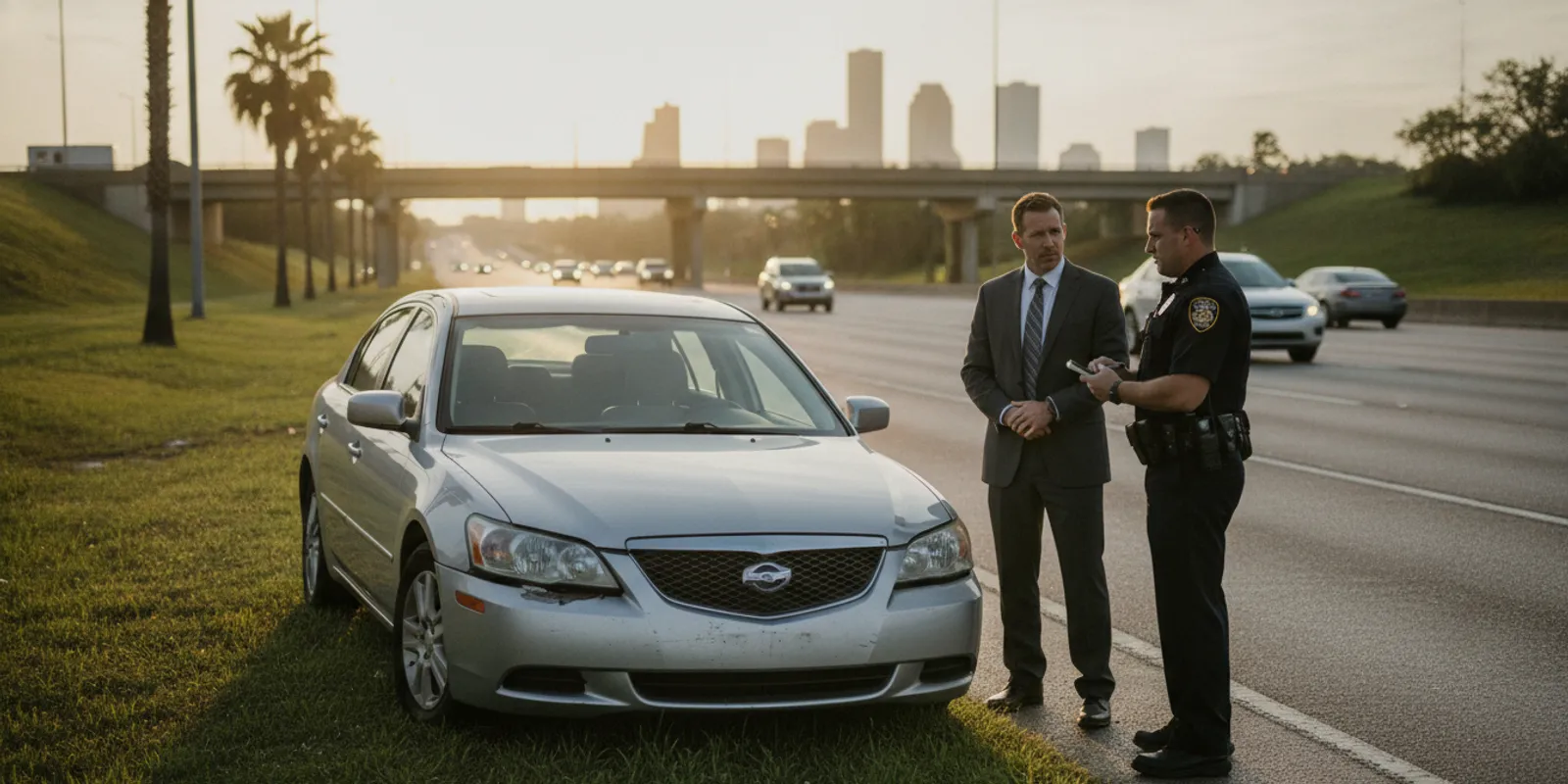
A driver who leaves after a crash can leave you hurt, with a damaged car, and with no name to give the police. A hit and run accident lawyer can help you sort the next questions, but the first hours are about safety, medical care, a report, and saving what you still know. By Wendi R. Bailes-Dodson
Contact Dodson Law Firm or call 713-338-2525 to ask about a free injury case review.
What makes a hit-and-run different from other crashes?
In an ordinary crash, both drivers usually stay, trade names, and wait for a report. A hit-and-run is the opposite. The other vehicle is gone, and you may have only a color, a partial plate, or a direction of travel.
That gap changes the work. Police have less to investigate. Your insurer has less to compare against your account. A civil claim may have no identified defendant until more facts turn up. None of that means you should chase the other car. Chasing can cause a second crash and can delay care for anyone who is hurt.
Texas law puts duties on the driver who was involved, not on the person left behind. Under Transportation Code Chapter 550, a driver must stop if a collision causes injury or death, or is reasonably likely to. The driver must return if needed, check whether a person needs aid, and stay until the required information is given. Leaving instead can be a crime. The degree depends on whether someone died, suffered serious bodily injury, or had a lesser injury.
Those criminal rules do not decide your civil case by themselves. A criminal charge, a plea, or no charge at all can exist alongside a separate injury claim. This article is general information about Texas law. It is not advice about your crash.
What should you do in the first hour?
Get out of traffic if you can do it safely. Turn on hazard lights. Call 911 if anyone is hurt, if the road is blocked, or if you need emergency help. Do not follow the other driver.
Tell the dispatcher that the other driver left. Give the location as exactly as you can, including the cross street, highway direction, or nearby business. Say whether you are still at the scene or already on the way to care. If you left only to get to a hospital or to a safe place, say that clearly so the report does not look like you vanished too.
Take injuries seriously even if you can walk. Pain, headache, dizziness, or stiffness can show up later. Get a medical evaluation, follow the provider’s instructions, and keep discharge papers, prescriptions, bills, and notes about missed work. Do not skip emergency care so you can hunt for cameras.
If it is safe, write down what you still remember before the details blur:
- The time, the exact place, the weather, and the direction you were traveling.
- The other vehicle’s color, size, make or model if you know it, damage, and any partial plate.
- Marks such as a roof rack, trailer, logo, or broken light.
- The direction it left and whether anyone else saw it.
- What you felt at impact and when you first noticed pain.
Write only what you observed. If you are guessing, label it as a guess. A wrong plate number can send the investigation the wrong way. A partial number you are sure about is more useful than a complete number you invented.
How do you report the crash and keep the evidence?
Ask the responding agency how to get the incident or crash report number. If no officer came because you had already gone to the hospital, call the agency that covers that road and ask how to make a delayed report. In Houston and the surrounding counties, the right agency may be city police, a sheriff’s office, or the Department of Public Safety, depending on the road.
Keep originals. Photograph the vehicles that remain, the damage, debris, skid marks, traffic signals, and visible injuries. Save dash-camera files in their original form and make a backup. Note nearby businesses, apartments, or toll cameras that might have faced the road. Ask the owner promptly whether video exists and how long it is kept. Do not enter private property or pull footage yourself.
Useful records often include:
- Photos and video of the scene, damage, and injuries.
- Witness names and what each person says they saw.
- The crash or incident report and any supplement.
- Medical records, repair estimates, tow receipts, and wage notes.
- A dated timeline you update when you remember something new.
If a witness offers a phone number, ask whether they will speak with police. Do not press them to match your version. When you later recall a detail, note the date you recalled it. Share the new fact with the investigating agency and your insurer instead of rewriting the old account.
Separate what you saw from what you inferred. “A dark sedan went north on the feeder” is an observation. “The driver must have been distracted” is a conclusion. Insurers and lawyers can use the first. The second can create a dispute you do not need.
Which Texas duties apply when a driver leaves?
Chapter 550 splits the duties by what the collision involved. Section 550.021 covers injury or death. It requires an immediate stop. If the driver did not stop at the scene, it requires a return. The driver must check whether anyone needs aid and must stay until the information rules in section 550.023 are met. The driver must stop without blocking traffic more than necessary.
Section 550.023 requires the driver to give a name and address. The driver must also give the registration or plate number and the liability insurer, if any. That information goes to an injured person, or to the occupant or person attending a vehicle involved. If requested, the driver must also show a driver’s license. If someone is injured, the driver must give reasonable help. That includes arranging a ride to a physician or hospital if treatment is clearly needed or if the injured person asks.
If the crash damaged only a vehicle that was driven or attended, section 550.022 still requires a stop and the same exchange of information. Section 550.024 covers a crash with only an unattended vehicle. The driver must try to find the owner and give the same information. If the owner cannot be found, the driver must leave a written notice in a conspicuous place. The note must include the driver’s name and address and a statement of the circumstances.
Chapter 550 applies on a highway or other public place, on certain private business access ways and paid parking areas, and on roads owned by a water control and improvement district. It does not apply to every private driveway. Whether a particular lot or road is covered is a fact question. Do not treat a blog summary as a ruling on your location.
The criminal consequences depend on the harm and the facts. A civil injury claim uses a different standard and a different court. An acquittal, a dismissal, or no arrest does not automatically end a civil claim, and a conviction does not set the dollar value of one.
What insurance questions are worth asking?
Call your own insurer promptly and follow the notice rules in your policy. Say that the other driver left. Give the facts you know. Ask what documents the insurer wants, and write down the date, the person’s name, and the claim number.
Then ask a narrower question: does this policy include uninsured-motorist coverage, and what proof does the insurer say it needs when the other driver is unknown? Coverage, exclusions, and deadlines live in the policy. A hit-and-run does not by itself mean every loss is covered. Some policies require a police report, contact with the insurer within a set time, or independent medical exams. Read the form. Do not assume.
This post does not walk through how to file or prove an uninsured-motorist claim. That is a separate insurance question. The point here is to ask early, before a deadline in the policy passes, and to keep the crash report and medical records the insurer is likely to request.
Be careful with the other side’s requests, if an insurer later appears. Do not sign a release before you know what it closes. Do not give a recorded statement to another insurer until you understand the request. You can ask for it in writing and take time to read it. If your own insurer asks for a statement under the policy, ask what it needs and keep a copy of what you send.
| Question to ask | What to note |
|---|---|
| Did I report the crash to the right agency? | Why it matters: The report is often the first record that the other driver left. Keep: Report or incident number and the agency name. |
| Does my policy have uninsured-motorist coverage? | Why it matters: It may be the only insurance path if the driver is never found. Keep: Policy form, claim number, and any deadline the insurer names. |
| What proof does the insurer want? | Why it matters: A missing report or late notice can become a coverage dispute. Keep: Photos, medical records, and the written request. |
| Am I being asked to sign a release? | Why it matters: A release can close claims you have not evaluated. Keep: The unsigned document and the date you received it. |
| Has anyone identified the other vehicle? | Why it matters: A plate, camera, or witness can change who you can pursue. Keep: The new fact, the date you learned it, and the source. |
When can a hit and run accident lawyer review a civil claim?
A civil claim is about whether someone failed to use ordinary care and whether that failure caused harm. Leaving the scene can be important evidence. It is not, by itself, a dollar figure. You still need facts about how the crash happened, who was driving, and what injuries followed.
If the driver is later identified, a claim may be made against that person and, in some cases, against an employer if the person was working. If the driver is never identified, the practical path is often your own coverage, including uninsured-motorist coverage if the policy provides it. Those are different paths. One crash can involve both, or neither, depending on the facts and the policy.
Texas generally gives an injured person two years to file a personal-injury lawsuit. Civil Practice and Remedies Code section 16.003 states that rule, with listed exceptions. A claim that a person has died can have its own timing. Some claims involving a government vehicle or a government road have much shorter notice rules. A policy can impose a shorter notice period for an insurance claim even when the lawsuit deadline is still open. Do not wait for the driver to be found before you ask about these dates.
Texas also uses proportionate responsibility. Under Civil Practice and Remedies Code Chapter 33, recovery can be reduced by the claimant’s share of responsibility. A claimant who is more than 50 percent responsible may recover nothing from a defendant. A hit-and-run does not erase questions about speed, signals, or lookout. Be accurate about your own driving when you describe the crash.
Dodson Law Firm does not promise a result or a settlement amount. Past results, including any matter the firm has handled, do not predict this one. Injury matters may be reviewed at no charge, and the firm describes a no-fee arrangement unless there is a successful recovery for injury cases. Ask whether that arrangement applies to your facts. It does not automatically apply to family, business, or mediation work.
What should you bring if you talk with a lawyer?
A short, organized file is more useful than a long retelling. Bring the crash report number, photos, medical discharge papers, the insurer’s claim number, and your timeline. If you have only some of those, bring what you have. Missing pieces are common when the other driver left.
A hit and run accident lawyer can look at whether the other driver may still be identified, what your policy may cover, and which deadlines deserve attention first. The review is about your facts. It is not a promise that a claim exists, that a particular insurer will pay, or that a fee arrangement fits every matter.
Dodson Law Firm is a Houston firm at 1235 North Loop West, Suite 208, Houston, TX 77008. Personal injury is the primary practice. The firm meets clients from Harris, Fort Bend, Brazoria, Galveston, and Montgomery counties. For the firm’s car-crash work generally, see the Houston car accident lawyer page. For how long a Texas injury lawsuit usually takes to file, see how long you have to file a personal injury lawsuit in Texas. If a person died, the wrongful death page is the separate starting point. If you were walking, the pedestrian accident guide covers that setting instead of this one.
Hours are Monday through Friday, 9 a.m. to 5 p.m. Central. You can also start from the personal injury overview or the contact page.
Frequently asked questions
Do I still report a hit-and-run if damage looks minor?
Yes. Report that the other driver left, even if you are unsure how serious the damage is. A report creates a record of the time, place, and the fact that you could not identify the other driver. Minor-looking damage does not tell you whether an injury will appear later.
Can I file a claim if the police never find the driver?
You can still ask your own insurer what your policy covers, including uninsured-motorist coverage if you bought it. A lawsuit against an unknown person is a different and often impractical path. Whether a claim is paid depends on the policy language and the proof you can offer, not on a blog post.
How long do I have to file a lawsuit in Texas?
For many injury claims, the lawsuit deadline is two years under section 16.003. Wrongful death, claims involving a government unit, and insurance notice deadlines can be different. Ask about your dates early instead of counting from the day the driver might be found.
Should I talk with the other driver’s insurer?
If an insurer contacts you and claims to represent someone else, ask for the request in writing. Do not sign a release or give a recorded statement until you understand what it covers. You can have a lawyer review it first.
Does leaving the scene prove the other driver caused the crash?
No. Leaving can violate a criminal duty and can matter as evidence, but a civil claim still looks at how the collision happened and who was responsible. Your own speed, signal, or lookout can still be part of that question under Texas proportionate responsibility.
Contact Dodson Law Firm or call 713-338-2525 to discuss a Texas hit-and-run.
After a hit-and-run, get care, make the report, and keep the records. Then ask a lawyer which insurance questions and deadlines apply to your facts.
Author Bio
 Wendi Dodson is an experienced attorney and the founding partner of Dodson Law Firm, PLLC, a family law and personal injury firm in Houston, TX. Her practice areas include divorce, child custody, child support, spousal support, property division, and personal injury cases. As a Texas Certified Mediator and graduate of Harvard Law School’s Program on Negotiation, Wendi brings exceptional conflict resolution skills to her practice.
Since graduating Cum Laude from Thurgood Marshall School of Law, she has earned multiple CALI Excellence for the Future Awards, demonstrating her commitment to legal scholarship.
Wendi actively participates in several professional organizations, including the State Bar of Texas and the American Bar Association, reflecting her dedication to ongoing professional growth and community involvement.
Google | State Bar of Texas | LinkedIn | Avvo